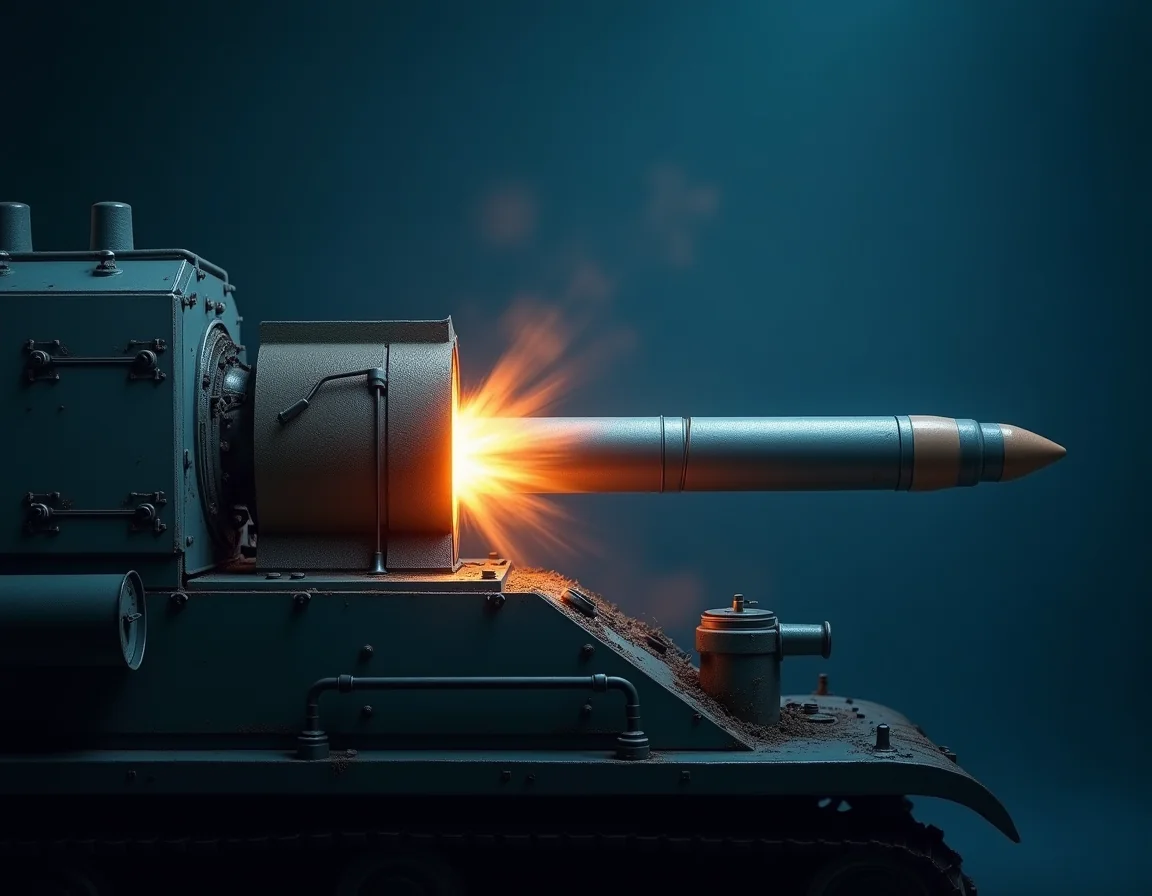
Normalization
Shell Normalization
How much a shell's impact angle is 'corrected' toward perpendicular when striking sloped armor — making penetration easier than pure geometry suggests.
What it means
Shell normalization is the in-game representation of how real-world shells deform on impact, partially 'normalizing' their flight path closer to perpendicular against sloped armor. The result: an angled plate doesn't behave as 'thick' as raw trigonometry would suggest. Different shell types normalize differently — and this matters enormously for whether a shot penetrates angled armor.
How it's calculated
Example
Why it matters
Normalization is why AP often penetrates angled armor that APCR (despite higher base pen) cannot — and why HEAT is unreliable against sloped tanks despite massive pen on flat plates. Choosing the right shell for the target's angle matters more than choosing the shell with the highest paper pen.
Common pitfall
Anti-detect browsers let you safely grind credits on alt accounts without bans. Used by serious WoT players, crypto airdrop hunters, and account farmers.
See Dolphin browser →Affiliate link — we may earn commission from purchases
Related terms
- Ricochet — When a shell deflects off armor instead of penetrating — typically at impact angles over 70° from the perpendicular.
- Overmatch — When shell caliber is ≥3× armor thickness, ricochets become impossible and angle modifiers are reduced.
- Armor angling — Tilting your armor to multiply its effective thickness against enemy shells.
- Ammo types — AP, APCR, HEAT, and HE — each shell type behaves differently against armor.